
Skip to content
Cogitave

Research at Cogitave

Build the layerthe problemactually needs.

Our research moves between models, runtimes, operating systems, browsers, and physical machines—where reliable autonomy depends on the layers beneath the interface.

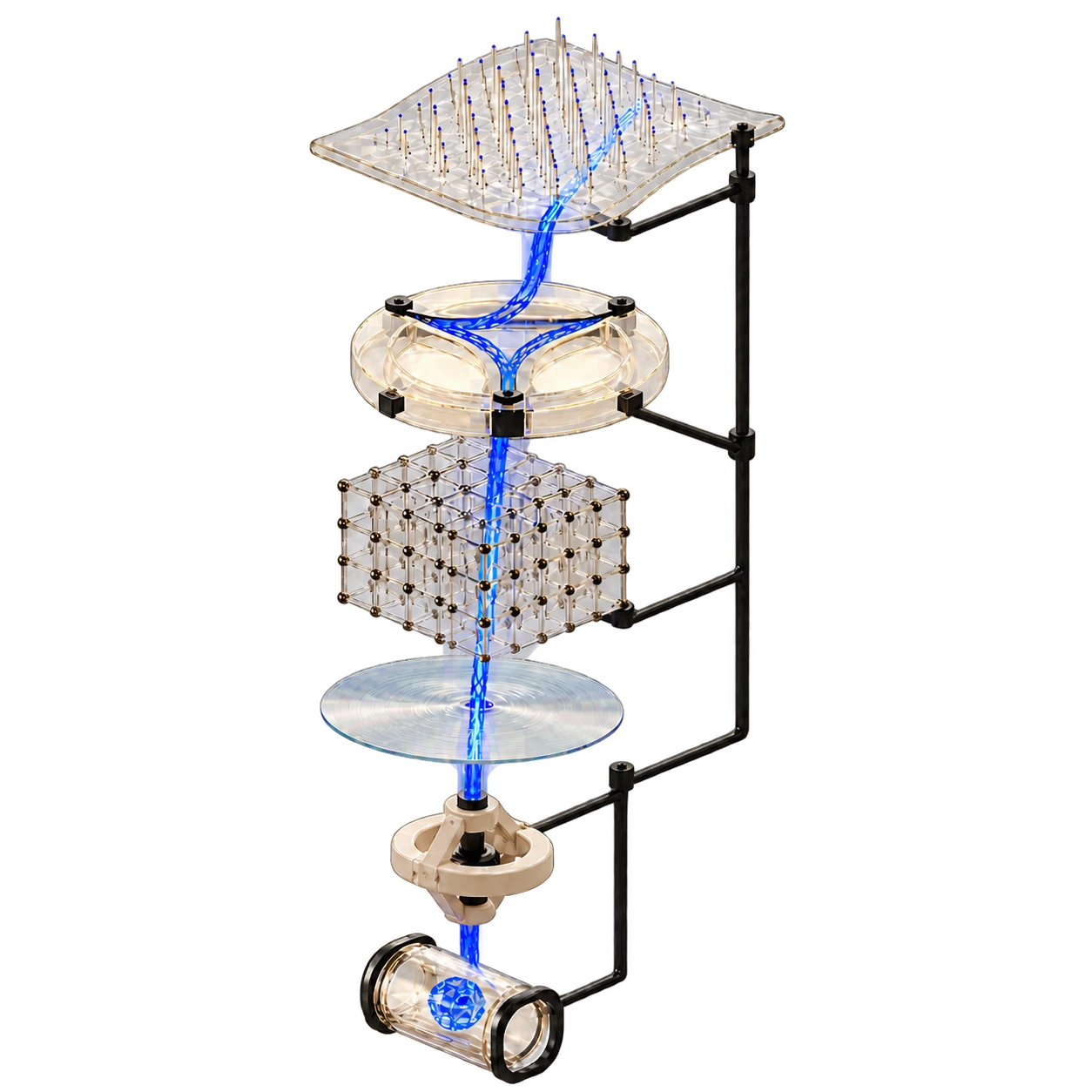
A six-layer research apparatus connecting model systems, agent runtimes, kernels, browser interaction, embodied control, and operational evidence
RESEARCH SYSTEM / 01—06

Research principle

A claim is only useful when its boundary is visible.

We separate architecture from evidence, prototypes from validated systems, and intended properties from demonstrated ones. The result is research that can become accountable engineering without losing its intellectual honesty.

Active programmes

From runtime semantics to physical authority.

R / 01Model systemsActive programme

Model capability must survive contact with the workload.

We develop and study model architectures, adaptation, inference, and task-level evaluation as one system. The aim is not an isolated benchmark result, but useful behaviour within an explicit quality, latency, cost, and deployment envelope.

  • Model development and adaptation
  • Workload-specific evaluation
  • Inference quality, latency, and cost
R / 02Agent systemsActive programme

Agents as bounded systems, not unstructured loops.

We study the runtime responsibilities beneath capable agents: process isolation, scheduling, identity, budgets, signals, memory, checkpointing, evaluation, and an auditable event stream.

  • Provider-independent execution
  • Durable checkpoint and resume
  • Explicit permission boundaries
R / 03Sovereign computeActive programme

An operating system whose claims begin at boot.

Yuva explores a no_std Rust unikernel and micro-VMM with machine-checked leaves, fail-closed evidence, and a strict distinction between what is proved, measured, and still unknown.

  • Machine-checked leaves
  • Fail-closed boot path
  • Research substrate—not a production OS yet
R / 04Browser systemsActive programme

Computer interaction needs a native, inspectable boundary.

Nimbus investigates a reproducible Chromium baseline, Nimbus-owned identity and shell, native content filtering, and a Rust-native, client-neutral MCP companion for local-first human and agent work.

  • Reproducible upstream baseline
  • Native computer-interaction surface
  • Privacy and performance release gates in progress
R / 05Embodied autonomyActive programme

Intelligence becomes accountable when it can move a machine.

Diyar connects perception, real-time control, simulation, embedded execution, and edge policy so autonomous behaviour can remain bounded when networks, compute, and sensor confidence change.

  • Perception and control loops
  • Simulation-to-device evidence
  • Offline operational authority
R / 06Secure field operationsActive programme

Remote operation should create evidence, not another hidden entrance.

Massar investigates outbound-only remote access, signed authority, session evidence, and operational recovery for devices that must remain governable across unreliable or untrusted networks.

  • Outbound-only connection
  • Authorized and auditable sessions
  • Production validation pending

Cogitave Learn

One knowledge surface for people and agents.

Documentation, guided learning, hands-on practice, and the standards behind Cogitave products are published through the same corpus—with an MCP interface for agent access.

Open Cogitave Learn